The third panel explored how NATO is redefining critical infrastructure and why the military’s role in its protection is expanding. It examined the evolving threat landscape, the vulnerabilities of vital national assets and the importance of collaboration across military, government, academia and industry. The discussion highlighted why critical infrastructure has become a strategic target and how collective resilience can be strengthened in this new threat era.
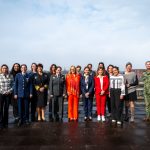
Panellists: Maj. Gen. Wilfred Rietdijk, Brig. Gen. Miguel Guil, Mr. Martin Slijkhuis, and Mr. John-Mikal Størdal

Key Takeaways:
- Critical infrastructure is a deeply interdependent, hybrid vulnerability with unclear ownership.
Infrastructure such as ports, energy networks, railways and telecommunications is embedded in complex civil–military systems that adversaries actively study and exploit. Yet no single actor can legally or practically protect it: companies are restricted, militaries lack authority, and responsibilities are fragmented across national, alliance and private sectors.
- Protection and resilience require multinational, cross-sector governance.
Since much infrastructure is multinational and underpins alliance-wide military mobility, national efforts alone are inadequate. Experiences when coordinating major security events show that effective protection demands integrated action across NATO, the EU, emergency services, industry, telecom providers and government agencies, supported by trust and clarity of roles.
- Technological innovation and selective offensive capability are essential but not sufficient.
Emerging technologies such as cyber, data, ISR and space are critical for understanding, defending and, when required, targeting critical systems. However, technology only works when paired with sound concepts, hybrid command posts, and the ability to process and act on vast amounts of information in fast-moving threat environments.
- Human factors and cognitive diversity are central to solving complex security challenges.
Resilience depends on leadership, mindset, skillsets and the ability to work across cultures, disciplines and legal frameworks. Diverse perspectives from scientists, psychologists, social scientists, industry experts and other civilian specialists improve foresight, decision-making and understanding of hybrid threats, including the grey zone between peace and war.
- Future readiness requires foresight, imagination and broader societal engagement.
Scientific trend analysis, wargaming and expanding participation in research communities help anticipate long-term challenges. At the same time, progress is often limited by cultural inertia rather than political will. Harnessing the interest and energy of younger generations, and cultivating more creative, adaptable thinking across NATO and its partners, are essential to strengthening collective resilience.

Summary of the panel discussion:
The discussion focused on the future of defence, the protection of critical infrastructure, and the evolving relationship between technology, society, and military power. Speakers emphasize that while technology is essential for maintaining an edge, it must be integrated with strong human expertise, diverse perspectives, and organizational adaptability. Critical infrastructure such as ports, energy systems, transportation networks, and digital networks has become a strategic vulnerability in hybrid conflict, yet responsibility for protecting it is often unclear or constrained by legal and bureaucratic barriers.
There is a strong call to broaden cooperation across military, civilian, academic, industrial, and technological communities, recognizing that solutions emerge from cognitive diversity and cross-sector collaboration. The complexity of modern conflicts requires new command-and-control approaches that rely less on strict hierarchy and more on trust, shared understanding, and the ability to work with capabilities not directly under military authority.
Cultural and leadership transformation is needed, emphasizing on imagination, humility, and narratives that can effectively mobilize political and industrial support. The discussion highlighted the importance of learning from recent conflicts, challenging simplistic ideas like decisive battles, and preparing for sustained, systemic competition rather than pursuing short-term, technology-driven wins.