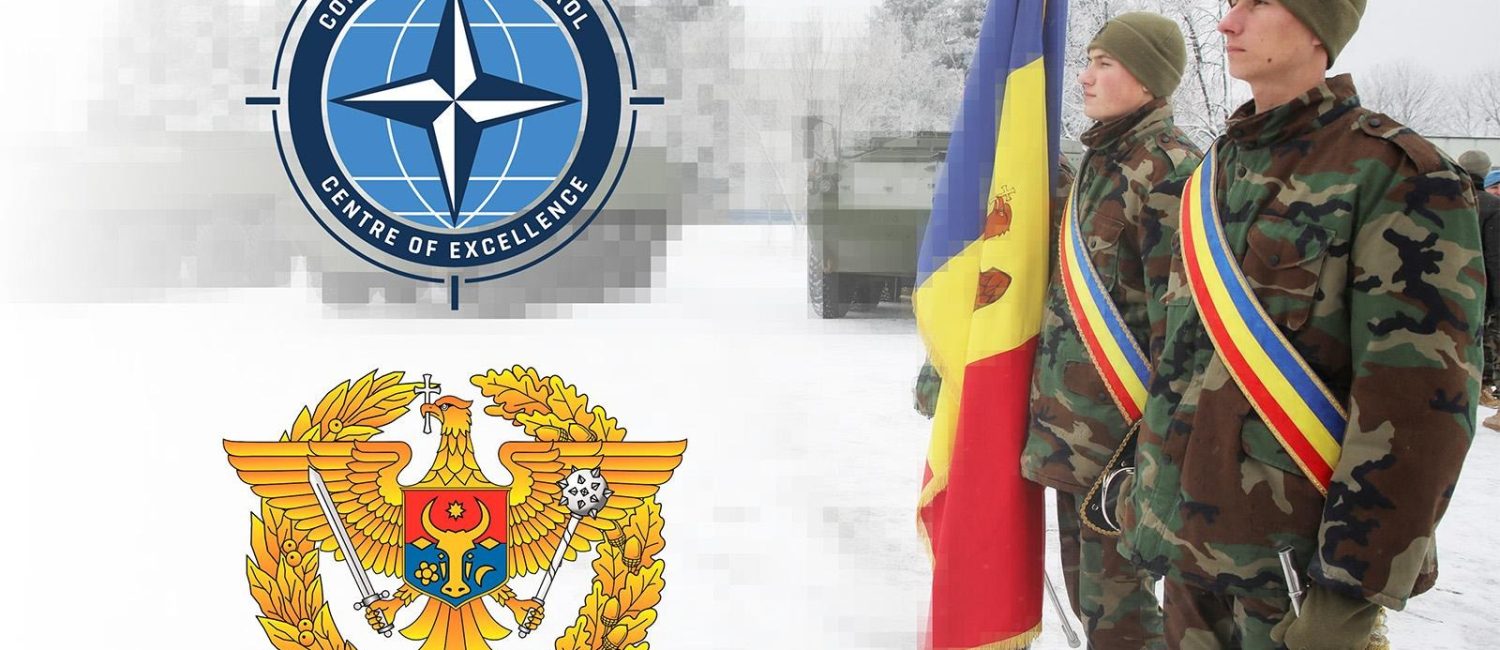
On Wednesday 24 June 2026, The NATO Command and Control Centre of Excellence presented the results of the C2 Assessment, that was conducted earlier this year. This marks the end of phase 2. . The assessment report provides the general staff of Moldova with tangible recommendations to further improve the pillars of C2, People, Processes, Technology and Structure. Results of the assessment remain confidential and will not be shared with external parties.
“What makes this work meaningful is its practical orientation. The recommendations give Moldova an independent view on possible improvements. If chosen, we can connect to the NATO knowledge base and education and training community to directly takes steps to improve. This is the start of a process, not the end of one.” said Major Verbruggen, lead assessor from the NATO C2COE.
This assessment is conducted at request of the Netherlands MOD executed within the framework of the NATO Enhanced Defence and Related Security Building (EDRSB) Initiative and aims to support the Republic of Moldova in the ongoing (digital) transformation of its Armed Forces. By means of a desk-research and on-site assessment, the objective is to contribute to the development of an operational Moldovan Armed Forces.
The assessment was structured around the three fundamental pillars of Command and Control: processes, people, and technology. It builds on real-world observations and insights across all aspects of C2, forming the basis for further analysis. During the assessment, the C2COE applied newly developed C2 Assessment methods, enabling a structured, consistent, and comprehensive analysis across all relevant domains.
An assessment, not an evaluation
This activity constitutes an assessment, not an evaluation. An assessment is purely an analytical activity that examines how and why performance (for instance in C2 processes, structures, or human factors) occurs and identifies potential improvements. Assessments aim to generate insights, findings and recommendations, rather than a pass/fail readiness rating. It is definitely not a Combat Readiness Evaluation (CREVAL), as it does not certify whether a unit or headquarters meets predefined readiness standards.’